An Orange Yogurt Loaf That Tastes Like the Whole Fruit
Orange zest, plain yogurt and a thin coat of syrup give this everyday loaf three different kinds of brightness. The trick is knowing where each one belongs.
8 min read
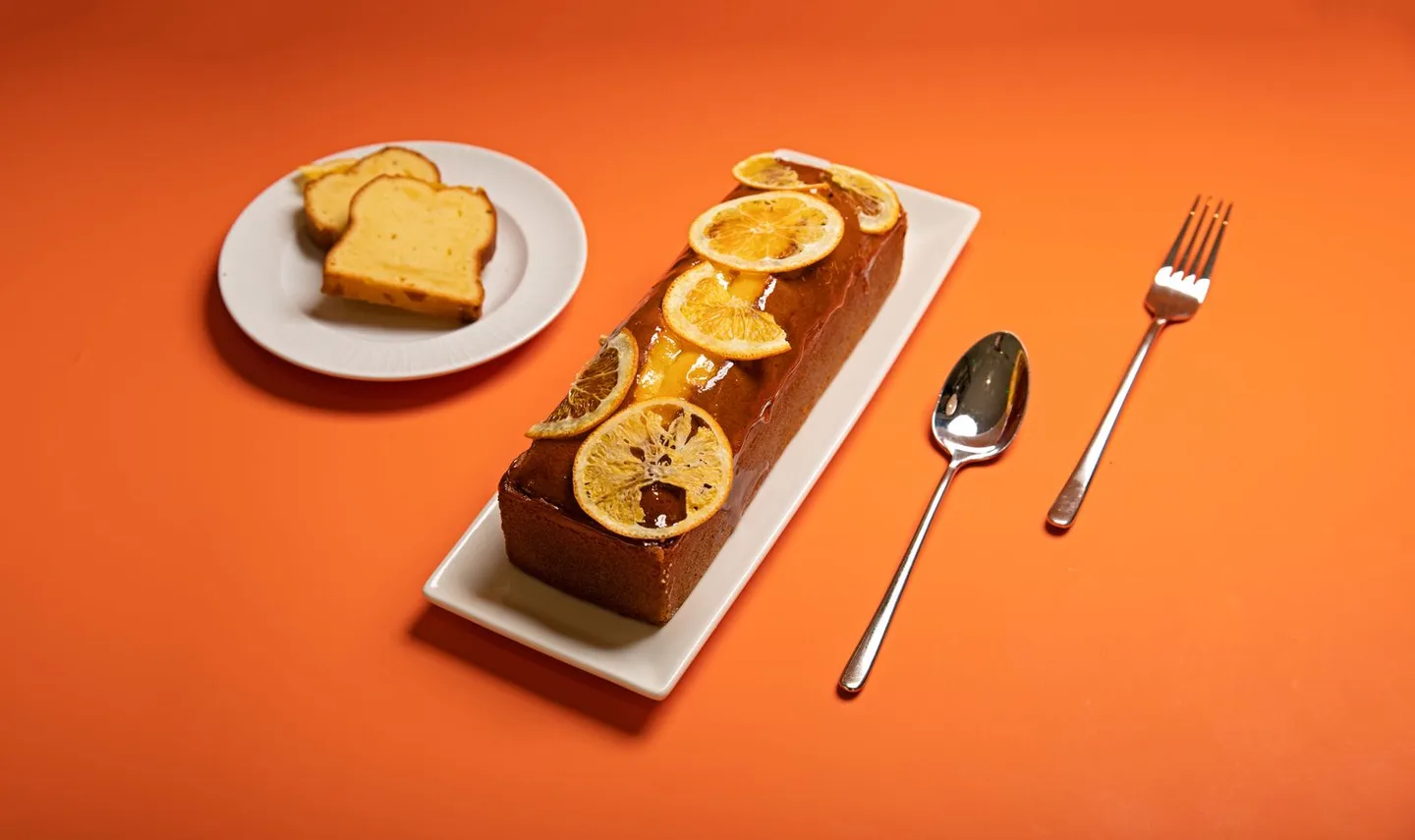
The first cut into an orange loaf should smell faintly of the oil released when you peel an orange over the sink. A sweet glaze can make that happen for a second, but a loaf perfumed all the way through needs zest in its batter. Then comes a different problem. The juice left behind looks too useful to waste, and pouring it into the mixing bowl is an easy way to make a cake that tastes mostly of sugar and sits damp at the bottom. This loaf uses the peel in the crumb and the juice where it can do more good, brushed over a surface that is still warm from the oven.
Choosing the oranges
Two medium oranges usually provide enough zest and juice. Look for fragrant fruit with firm skin. The weight of an orange gives some indication of how juicy it will be, but a handsome exterior tells you little about the juice's acidity. Taste a spoonful before you make the syrup. A very sweet orange can use a squeeze of lemon, while a mouth-puckering orange may need its full measure of sugar. Either works because you are making that decision in a separate saucepan. The cake underneath stays the same.
Wash the fruit and dry it before zesting. A fine rasp takes off curls of the colored outer layer without digging into the white pith. Stop as soon as the patch under the rasp looks pale and turn the fruit a little. Zest before cutting the oranges in half, while their shape still gives you something to hold. A vegetable peeler is another option. Peel broad strips and mince them until they disappear easily into sugar. Avoid leaving long, thick ribbons in the batter. They soften during baking but can still feel like little strands caught between otherwise tender crumbs.
Lemon and grapefruit deserve a different hand. Lemon zest is assertive and a full orange-sized pile can overwhelm a small cake. Grapefruit can be lovely, but its flavor depends more on how much pith finds its way into the syrup. For the first bake, stick with oranges. You can adjust a loaf you recognize much more confidently than one in which every variable changed at once.
Set the bench before you mix
For one loaf, use 210 grams all-purpose flour, 2 teaspoons baking powder, half a teaspoon fine salt, 170 grams granulated sugar, the zest of two oranges, two large eggs, 150 grams plain whole-milk yogurt, and 90 grams neutral oil. For the syrup, set aside 60 grams fresh orange juice and 25 grams sugar. A teaspoon or two of lemon juice is optional. The loaf fits a standard 8½ by 4½ inch metal pan. A slightly wider pan will yield a shorter cake that starts checking for doneness earlier.
Heat the oven to 350°F or about 175°C. Grease the pan lightly, then line its long sides and base with a strip of parchment. The paper should stick up enough to grip without folding over the batter. Leave the short ends bare and greased. With a paper collar folded around all four corners, it is easy to create a ridge of batter that traps the paper and tears when you try to lift the cake.
Use pourable, plain yogurt. Very thick strained yogurt can work if you loosen it with just enough milk to reach the consistency of softly whipped cream. Sweetened vanilla yogurt changes two things at once: the sugar level and the flavor. If that is all you have, save it for serving and use plain yogurt next time. Choose oil with a mild taste and smell. An assertive oil can make the cake interesting, but orange is the reason to bake this particular loaf.
Rub the sugar until it smells of peel
Whisk the flour, baking powder and salt together in a small bowl. Put the sugar and zest in a larger bowl and rub them with your fingertips. The sugar will start to look a little damp and clump where the oils have collected. It should smell noticeably brighter after a minute. This short job distributes the zest through the loaf and breaks up the little tangles that like to stick to a whisk. If your hands smell of orange afterward, you have done it right.
Whisk in the eggs until the mixture is evenly colored and slightly foamy at the edges. Add the yogurt, followed by the oil in a slow stream, whisking as you pour. You are looking for a uniform batter base without oily pools around the rim. If it separates slightly, whisk it again before the flour goes in. Once you add flour, switch to a broad spatula. Sweep along the bottom of the bowl, fold up through the middle and rotate the bowl as you go. Stop when no dry pockets remain. A few soft lumps will disappear in the oven.
Scrape the batter into the lined pan and level the top with two or three strokes. Set the pan on the center rack. Resist the urge to score a line down the top or add an extra spoonful of liquid because the batter looks thick. It ought to hold a shallow trail from the spatula for a moment. The cake will rise, form a crust and make its own crack.
Read the crack
Begin checking after about 45 minutes. Some ovens will need another ten minutes or more. The sides should pull away from the pan just slightly and the top should spring back when touched gently near the center. Insert a thin skewer into the thickest part. Moist crumbs are fine. A stripe of shiny batter means the middle needs more time. If the top is already deep gold but the center is wet, drape a loose piece of foil over the pan for the rest of the bake.
A split down the middle often looks less finished than the shoulders. The crust there broke open after those shoulders were already set. Color alone can mislead you, particularly if your oven heats unevenly. Check the deepest part of that split and a spot off to one side. An underbaked loaf may look tall for a minute and sink as it cools. Leaving it in until the center is set gives you a thin crust and a clean slice once the cake has rested.
While the loaf finishes, heat the orange juice and sugar in a small pan, stirring just until the sugar dissolves. Simmer for a minute or two to take off a little water. The result should still run freely from a spoon. Add lemon juice a teaspoon at a time if the syrup tastes flat. Aim for the flavor of bright fruit with a soft sweetness behind it. There is no need to boil it to the thickness of a dessert sauce.
Put the syrup where you want it
Let the finished cake sit in the pan for ten minutes. Lift it onto a rack over a plate. Brush the top and upper sides with the warm syrup, then wait while the first coat disappears. Add a second thin layer. You may have some syrup left and that is fine. The goal is to moisten the crust and carry the scent of juice into the outer crumb. Flooding the center crack sends most of the syrup to one patch of the loaf, and that patch can turn sticky before the rest of the cake has benefited.
A pastry brush gives the best control, though the back of a teaspoon will spread a small amount nearly as well. For a drier finish, brush only the top. For a little extra shine on a loaf going to someone's house, let the first two layers dry and brush on another just before packing. Wait until the cake is fully cool before wrapping. Steam collecting inside a container softens the crust much faster than a thin coat of syrup does.
A better second slice
The first slice may taste sharper around the edges and milder at the center. The next day the aroma is more even, and the top will have a soft, candied feel. Cut with a thin serrated knife and let the saw do the work. Pressing straight down can compress the crumb and smear the syrup across the cut face. The heel is particularly good with unsweetened yogurt and a few fresh orange segments. A center slice pairs well with tea on its own.
Keep the plain loaf covered and serve it within a couple of days, or wrap individual slices and freeze them. Frozen slices thaw faster if you separate them before packing. Skip any cream topping before freezing. When you want a slice warm, toast it lightly in a dry skillet on one side. Oil-based crumb browns quickly and needs watching. The surface may go from pale to almost caramelized in less than a minute once the skillet heats up.
If the next loaf needs a little more orange, add another orange's zest before you increase the syrup. If it feels too rich, try a few tart segments on the plate before changing the oil. If you want more contrast, sprinkle a tiny pinch of coarse sugar over the just-brushed crust and let it dry. Each adjustment affects a different part of the bite. That is the advantage of giving the peel, juice and yogurt their own work to do.