How to Finish a Bunch of Dill
Divide fresh dill according to its texture, using the fine fronds at the table, the tender stems in cooking, and the extra leaves in the freezer.
7 min read
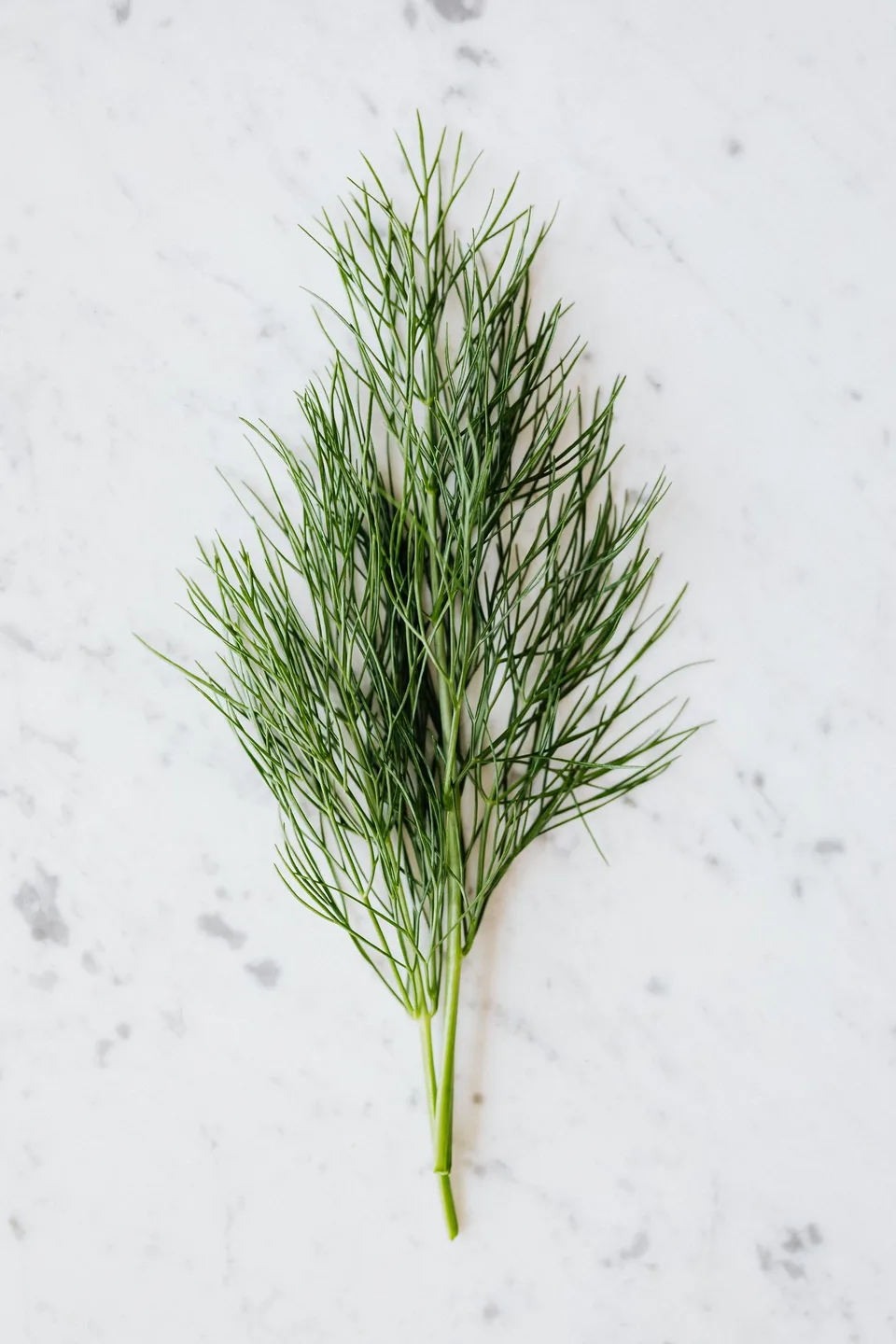
A bunch of dill is at its most persuasive on the way home from the shop. The finest leaves spill over the edge of the bag, and the scent comes out as soon as you open it. A recipe takes a few sprigs and gives back a bunch only slightly smaller than the one you bought. Four days later it takes up the same space but has lost the crispness that made it appealing. The useful way to buy dill is to decide which parts of the bunch will get eaten first. The fronds, the small green branches, and the firmer stems each have a job.
Choose fresh dill with flexible stems and leaves that still look springy. The tips are fine enough to bruise easily. An outer sprig with a broken top says little about the rest of the bunch, but look carefully if the center is wet or compressed. Yellowing tips and a limp lower half usually suggest that the bundle needs to be used quickly. Buy a small bundle if you can. A single sprig gives a surprising amount of flavor once it is chopped and spread through a sauce. Treat the large supermarket bunch as a candidate for several different meals or buy a smaller packet if you have one use in mind.
Store the bunch where you will remember it
Undo the tight band when you get home and separate any damaged leaves. If the herb is damp, shake off loose water and lay it on a clean towel before you put it away. A loose wrap around the dry bunch helps keep the leaves together. Some people stand fresh herbs with cut stems in a small jar with just enough water to reach the ends, loosely cover the tops, and refrigerate. A low refrigerator shelf can make a jar awkward. Use a wrap or a lidded container instead if the bunch will get knocked over. The best storage method is the one that keeps the leaf tips in good shape and makes the dill easy to reach.
Wash the dill under running water before using it. A clean salad spinner or a gentle pat with a dry towel gets rid of droplets that would dilute a dressing. Separate the finest tips with your fingers if they are going straight onto food. For chopped dill, pull several small branches together and cut across them with a sharp knife. A damp pile drags along the board and can leave most of the herb on the blade. Take a moment to dry it and chop only the amount you need. A small bundle of whole sprigs keeps its appearance more readily than a container full of finely cut leaves.
Keep the tougher stems apart on one corner of the board. Break one in half and smell it. A substantial stem can carry a pleasant grassy version of the flavor, even when it would be awkward to chew. Use it in a liquid that will be strained or tied with other herbs so the whole bundle can be lifted out later. If the stem is short and tender, slice it finely and use it like a milder part of the leaf. Give the rougher lower ends a different job or discard them if they have already dried out.
Use the fronds on potatoes while they still smell fresh
Put small potatoes in a saucepan and cover with cold water. Salt the water and simmer until a knife reaches the center without meeting a hard core. Drain and let steam escape. Slice the larger potatoes while they are still warm enough to take up dressing. Whisk a spoonful of mustard, a little cider vinegar, and oil in a bowl large enough to toss the potatoes. Add them and season to taste. Before serving, pull the best dill fronds off their branches and fold some into the potatoes. Leave some whole and place them on top. They are easier to smell and see when they have not all spent five minutes in a warm dressing.
For a cold potato salad, let the potatoes cool safely and refrigerate them promptly if you are making them ahead. Stir plain yogurt with a little mustard and lemon zest, then fold through the cold potatoes with chopped dill. The yogurt can be quite tart on its own. Taste before adding lemon juice. A small slice of cucumber, put in at the last moment, can give the salad a contrast to the soft potatoes. If the dish is waiting in the refrigerator for several hours, leave the cucumber for serving. It tends to release water once it has been salted and can thin the dressing in the bottom of the bowl.
Dill also works on a plate of roasted potatoes that already has a browned exterior. Sprinkle the herbs on immediately after the potatoes come out, using a little oil or melted butter to give them something to cling to. Use only as much as will stick. A flat layer of finely chopped dill can feel dry on the tongue. Small torn fronds scattered among rough potato edges are more pleasant to eat, and some of each bite remains plain enough to taste of potato. Serve the rest of the dill in a small dish if you know some people will want more.
Put the stems to work before the fronds
For a pot of white beans in broth, add a couple of fresh dill stems when you warm the broth. Keep them whole so you can catch them with tongs. Taste the liquid once the stems have softened. Remove them if the broth smells clearly of dill. If the flavor is quiet, let it steep a few more minutes. Cook the beans separately according to their own instructions or start with canned beans, then add them with a little of their liquid. At the table, a fine chop of the fronds gives a fresh layer of aroma. With two additions of the same herb you can keep the broth savory and still get a bright first spoonful.
Poached fish can take a similar treatment. Add a few stems to a shallow pan with water or broth, a little onion, and a few grains of pepper. Bring it to a gentle simmer and remove the stems before serving, then put freshly cut dill on the fish just after cooking. Cook fish to a safe internal temperature of 145°F or 63°C, measured at its thickest part. The heat above the liquid does enough to bring out the scent of the chopped leaves. If you put all of the fronds in at the start, much of the pleasure of buying them fresh will be gone by the time the fish reaches the plate.
For the leftover stems from a dressing, try putting one in the saucepan the next time you warm a light vegetable broth. Fish it out before adding an ingredient with a flavor you do not want the herb to overtake. A dill stem can work particularly well with a broth already sweet from carrots. Leave it out of a dish if another fragrant herb is already doing the same work. Separating the stems is useful because it gives you more choices, including the choice to use only a portion of them.
Freeze the extra dill while it still tastes good
A bunch can get large again once you have committed to making only one or two meals with it. Take out the part you will cook with tomorrow and freeze the rest while it is still in good condition. Wash the fronds, dry them, remove the toughest stems, and chop or leave the branches small. Spread them on a tray and freeze, then move the frozen dill to a labeled airtight container. Alternatively, freeze measured amounts with a little water in an ice tray and transfer the frozen cubes to a sealed bag. Those portions are ready to go into dishes with liquid, where the ice will disappear.
Frozen dill will not have the look of a bright fresh sprig. It works well where a softer leaf is expected. Drop a portion into cooked peas or a bowl of warm barley. Stir some through a broth when it is nearly ready, or combine it with soft butter just before you put the butter on hot vegetables. If you are using a cube, choose a dish that can accept the added liquid. A cold yogurt sauce is easier to control with the fresh fronds or a loose frozen portion than with a whole watery cube.
Dried dill has its own place, especially where there is no opportunity to use a whole fresh bunch before it wilts. It delivers flavor more evenly through a liquid and does not have the little bite and color of the fresh leaves. Add it sparingly, give it time to hydrate, and taste before adding more. A jar of dried dill and a bunch of fresh dill can both belong in a small kitchen if each is used for what it brings. Fresh leaves are most valuable on a dish where a few visible sprigs can still smell like the bunch you picked up on the way home.
University of Minnesota Extension guide to growing and storing herbs