A Crisp Tofu Bowl With the Sauce Underneath
Brown firm tofu in broad pieces and spoon the ginger and soy dressing under it so the crust survives the walk to the table.
8 min read
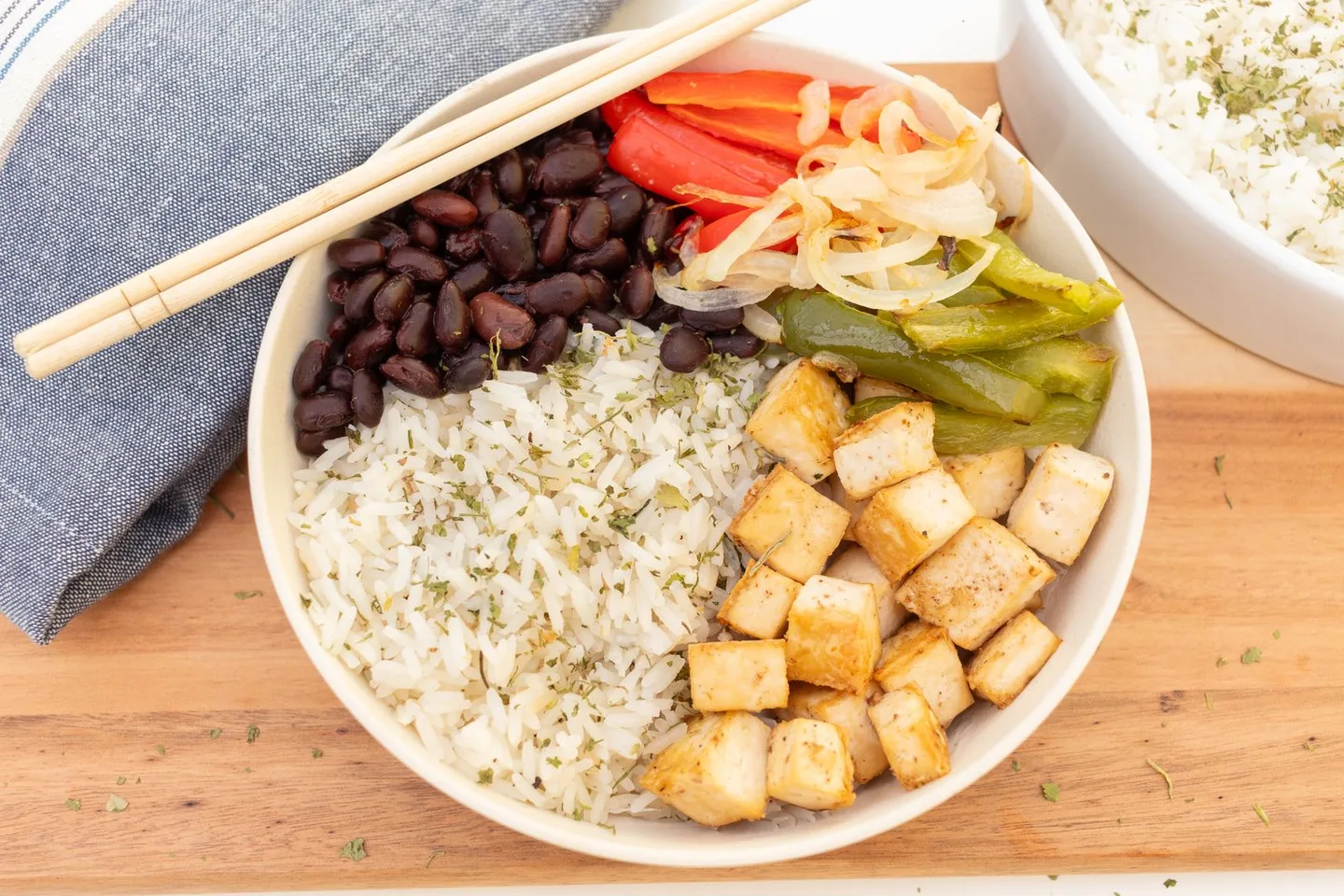
A bowl of tofu can be crisp when it leaves the skillet and soft by the time it reaches the table. The sauce is usually responsible. A thick glaze may taste good, but coating every edge means every edge starts to soften at the same moment. Try turning the arrangement around. Put the sauce and warm grains in the bottom of the bowl, then lay pieces of golden tofu on top. Some edges will touch the sauce and take on its flavor. Others will stay dry long enough to make the contrast worth noticing. You can drag each piece through more sauce as you eat.
For two bowls, use a fourteen-ounce block of firm or extra-firm tofu, two cups of cooked rice, and a small cucumber. Have neutral oil, cornstarch, fine salt, soy sauce, rice vinegar, fresh ginger, and a little sugar available. A scallion is useful if there is one in the refrigerator. The rice can be freshly cooked or safely stored and reheated. A slightly sticky short-grain rice holds the bowl together, while long-grain rice makes the dressing spread farther. Use whichever you like. If you already have a vegetable side, the cucumber can be replaced by that side or left out.
Begin with slices you can turn
Take the tofu out of its package and drain it. Slice the block crosswise into six or eight slabs, depending on its size. Lay them on a clean towel and blot the tops. If the tofu is particularly wet, set a second towel and a light board over the pieces for ten minutes. There is no need to press the block until it becomes rubbery. You want to remove water that collects at the surface when you touch it. Firm tofu that comes tightly packed often needs only a thorough blot. When you pick up a piece, it should leave a damp mark rather than a puddle.
Broad slabs are easier to turn than twenty cubes, and they give the skillet a large contact surface. Very thin slabs can break under the spatula, so keep them somewhere near half an inch thick. Pat any cut edges dry before seasoning. Sprinkle a small pinch of salt over the top of each slab, then dust it with a light coat of cornstarch. Turn and coat the other side. Shake off loose flour. The tofu should look lightly powdered rather than buried. A thick coat can become gummy in damp spots, which is exactly what you were trying to avoid by blotting the slices.
Give the first side time in the skillet
Set a wide skillet over medium-high heat. Add enough neutral oil to make a thin layer, then let it warm until the oil moves easily when you tilt the pan. Lay the tofu away from you with space around the pieces. You should hear a steady sizzle. If your skillet is small, cook in batches. The second batch is easier to manage if you dust it just before cooking. Tofu that sits under cornstarch for a long time tends to draw more moisture into the coating.
When the first side starts to color around the edges, test one piece with a thin spatula. If it resists, give it another minute before levering it up. A broad piece often releases more easily once the crust has formed. Check the heat if the underside has darkened unevenly in the first minute. Turn the burner down slightly and look at the other pieces. The first side usually takes several minutes, and the second may finish sooner because the pan is already hot. Adjust by color and feel. The slabs should be crisp enough to tap gently with a utensil and still have a tender interior when cut.
Stir the dressing while the second side cooks
Mix two tablespoons of soy sauce, one tablespoon of rice vinegar, one tablespoon of water, a teaspoon of sugar, and a half teaspoon of finely grated ginger. Stir until the sugar dissolves. Taste a drop with a few grains of rice. If you are using a dark or strong soy sauce, you may want another spoonful of water. If your vinegar is already sweetened, start with less sugar. The dressing should taste a little stronger than you would want on its own because the rice will soften it. Add a drop of toasted sesame oil if you enjoy its flavor. Several drops can make the whole bowl taste the same, so pour carefully.
There is no need to heat the dressing for the first bowl. Its sharpness works against the warm rice and tofu. If you want a softer ginger flavor, let the mixture sit a few minutes and strain out some of the grated ginger before serving. The solids can go into a vegetable sauté later the same day. For a brighter sauce, a squeeze of lime can replace some of the vinegar. Taste before combining the acids. Fresh lime varies enough from fruit to fruit that a spoonful can shift the whole bowl from savory to sour.
Choose one cold vegetable with enough bite
Slice the cucumber on a slight angle. If the middle is very seedy, split it lengthwise first and scrape out the loosest seeds with a spoon. A firm small cucumber can be sliced as it is. Leave the pieces undressed if you are assembling the bowls immediately. Salted cucumber releases water, which can dilute the dressing and make the bottom of the bowl look soupy. If you want a lightly salted cucumber, season the slices in a separate dish and drain them before assembly. A small handful of shredded carrot or thinly sliced radishes can fill the same role.
Cut a scallion into fine rounds if you are using one. The paler end is sharper, while the green part is milder. Put the white rounds in the dressing if you want them to soften slightly. Scatter the green rounds over the tofu at the end. Use fresh herbs if there is no scallion. A few pieces of cilantro or mint offer a distinct cool note beside the ginger. Keep them dry until you need them, since a handful of wet herbs can turn into a dark clump when it lands on hot tofu.
Assemble from the bottom up
Spoon roughly half the dressing over the warm rice. Keep some undressed rice visible so the bowl has different intensities from one bite to the next. Put the cucumber to one side. Lift the tofu from the skillet and rest it briefly on a rack, or set it on a plate without stacking the pieces. Cut the slabs in half if the bowls are narrow. Arrange them on the rice with some ends propped against the cucumber. Pour the remaining dressing into a small dish for the table. A little sauce will travel up from the rice. The top edges can stay crisp for several minutes.
If you want to serve the tofu as a shared dish, make the sauce a separate dip and cut the slabs into shorter fingers after cooking. Put a few cucumber slices among the tofu so people can take both without assembling a full bowl. You can also set out small lettuce leaves and let each person fold a slab and some rice inside one. In that case, leave the rice mostly plain and spoon sauce over individual bites. Large, wet lettuce leaves tear easily, so wash and dry them ahead of time.
Fix the next batch using the pan as a clue
If the tofu browned but the coating peeled off in sheets, the surface was probably damp when you dusted it or the coating was too thick. Blot more carefully and shake off the excess next time. A pale batch that felt oily may have gone into a pan that was still warming. Start with a single piece and listen for the sizzle before adding the others. If only the center of a slab browned, the slice may have been bowed. A spatula can press it down gently for a moment, but keep enough oil in the pan to coat the contact area.
Refrigerate cooked tofu, rice, and cucumber promptly in separate containers. Follow safe rice storage guidance and reheat only what you plan to eat. Warm tofu in a skillet with a little oil so the contact surfaces crisp again. Use a fresh cucumber or another crisp vegetable if the first batch has gone soft. The sauce can also flavor a sandwich spread or a plate of noodles. It only needs to meet the tofu in the bowl when you are about to take the first bite.
Cook a larger batch without softening the first
For four bowls, divide the tofu between two skillets or use one skillet in batches. Keep finished pieces in a single layer on a wire rack in a warm oven while you cook the rest. A plate lined with paper can take up a little oil, but it also holds steam close to the lower surface. The rack is a better choice for more than a brief pause. Keep the dressing and the rice at the table and assemble all the bowls together. That gives the first person and the last person the same freshly assembled crust.
If you need to put dinner on the table in separate shifts, cook only the tofu for the bowls you are ready to serve. Blot the rest and refrigerate it until you need it. Cornstarch goes on just before the second pan, when the coating still has a dry feel.