Steam Vegetables Without Losing Their Bite
A little space in the basket and a sensible order of cooking make it possible to serve several vegetables hot, bright, and properly tender at once.
8 min read
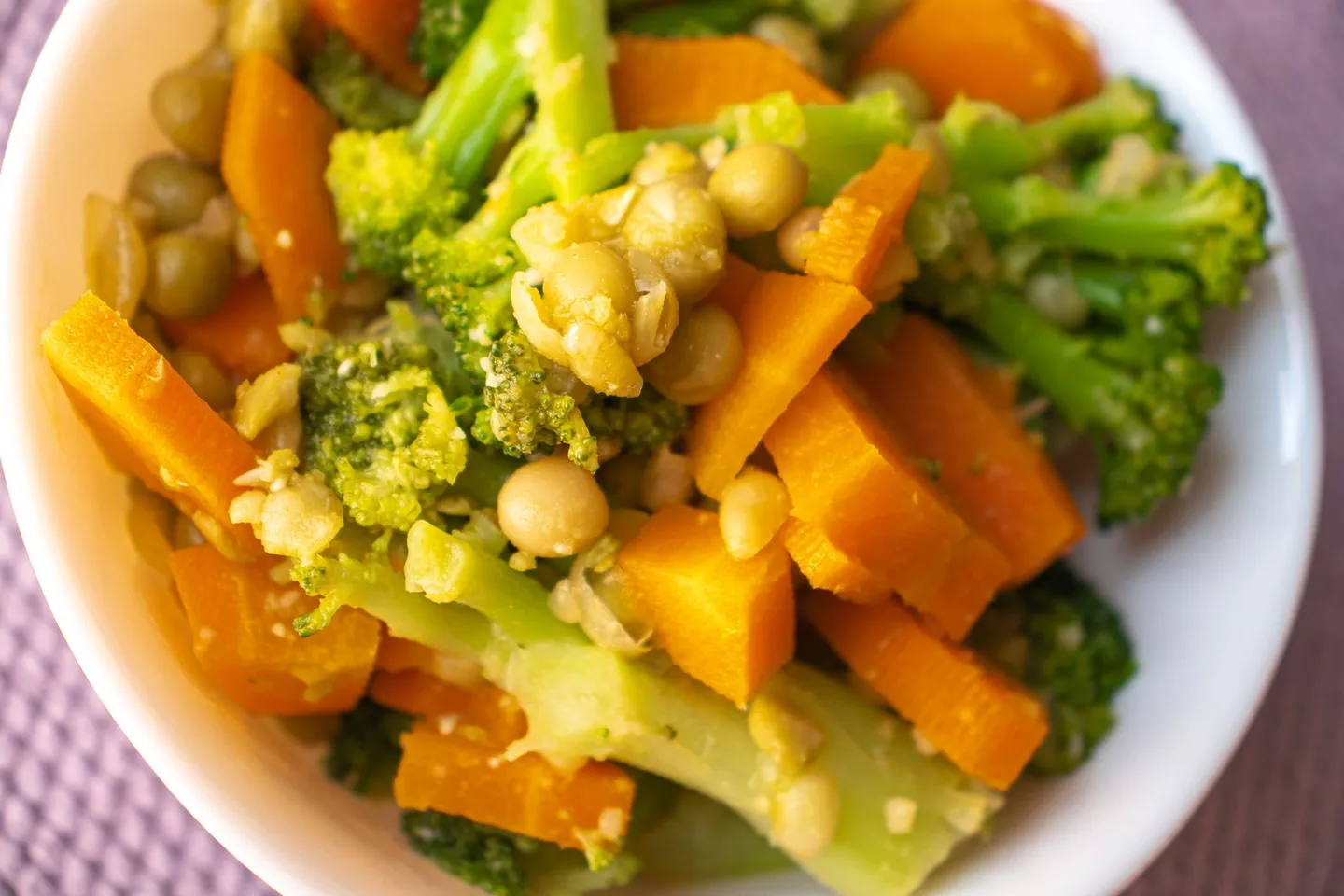
Broccoli and carrots are often served together and are rarely ready at the same moment. Put thick carrot coins and tiny broccoli florets in a crowded basket for the same length of time and one of them will suffer. It is possible to make the pieces similar enough in size that they finish together, but the easier option is to start one vegetable first and add the other later. That small change makes a steamer useful for a whole meal. Once the water boils, there is a dependable place to cook a handful of greens, a few wedges of cabbage, or a shallow layer of potatoes without having to wait for a free burner.
The point of steaming is control. The boiling water stays below the food, and the hot vapor does the work. The vegetables come out without a pan of cooking water to drain, although condensation can still collect on them. They can be served simply with salt, tossed with a dressing, or sent straight to a hot skillet for an extra touch of browning.
Fit the setup to the pot
A folding stainless steel basket that fits a covered saucepan is a practical starting point. Extend it so the base sits evenly. The pot needs enough water to make steam for the duration of cooking and enough clearance to keep the base of the basket clear of bubbling water. With the basket in place and no vegetables inside, check where the bottom sits. A depth of about an inch works for some setups. A small basket with short legs may require less. A tall insert will give you more room.
A metal steaming insert or a bamboo steamer can work too, provided the pot below supports it securely. Follow the manufacturer’s instructions for where the basket should sit and whether the cooking surface needs to be lined. If you line it with parchment, leave openings for steam and keep it away from any exposed flame. For broad, dry pieces of carrot or cabbage, lining often adds little. Whatever you use, make sure you can lift the basket safely. An insert that feels easy to move cold can become awkward when it is full of vegetables and the pot is emitting steam.
Bring the water to a steady boil before adding the food. Have the lid, oven mitts, and serving bowl within reach. Once the lid is in place, adjust the heat to maintain steady steam without letting water splash into the basket. Lift a lid away from your face and hands so the steam escapes in the other direction. Never let the pot boil dry. If you need more water for a longer batch, pause and add hot water carefully rather than pouring it through the vegetables.
Work backward from the texture you want
Start with a fairly simple question. Will you eat the vegetables as they come out of the basket, or will you cook them a second time? Green beans for a warm salad are finished when they are tender enough to eat and still have a little snap. Carrots that will go into a purée should cook until a fork enters with almost no resistance. Potatoes destined for a skillet can come out as soon as a knife passes through the center, before the outer edges begin to break down.
Cut vegetables to match that outcome. A large broccoli crown can give you pieces that differ by an inch or more. Divide its largest florets and peel the thick stem if you plan to use it. Cut the pale inner stem into coins or sticks, and give them a head start if they are substantially denser than the florets. With carrots, the narrow end can be cut into thicker coins than the broad end. What matters is that the pieces on your fork will cook at roughly the same rate.
Water clinging to the vegetables after rinsing can drip away in a colander while the pot heats. Delicate greens are a special case. An armful of spinach collapses to a very small heap once hot, but a large pile can wilt unevenly at first. Turn the greens once with tongs if needed. Be careful around the rising steam. If a particular leafy green is already very tender, put it in near the end and give it only the time it needs to turn glossy and relax.
Learn the order with broccoli and carrots
For a practice batch, use two medium carrots and a small broccoli crown. Cut the carrots into thin coins and the florets into pieces roughly the size of a large walnut. Peel and slice the broccoli stem if you are including it. Bring the water to a steady boil and put in the carrots first. After a few minutes, when the coins have warmed through but still feel firm, add the stem pieces and florets. Close the lid. Start checking a few minutes later.
A bright green surface can appear well before broccoli is done. Test a floret at its base with the tip of a knife. It should offer a little resistance and then give. Take a bite of a carrot coin to judge its center. If the broccoli is ready before the carrots, take out the florets with tongs and put the lid back while the carrots finish. The goal is to learn the distance between when the carrots and florets are ready in your kitchen. For your next batch you can give the carrots a slightly longer head start, cut them thinner, or choose slightly larger florets.
If you are cooking for more people than the basket holds comfortably, make separate rounds. A deep heap of mixed vegetables makes it hard to check the pieces at the bottom, and a top layer of broccoli may need more time than you expect. A smaller batch also lets you remove cooked vegetables without dismantling a stack. Transfer each round to a wide plate while you finish the rest. Vegetables gathered in a narrow bowl continue to steam one another after leaving the pot.
Apply the method to other vegetables
Green beans are a good place to start on a night you want only one thing in the basket. Trim the stem ends and keep the beans long. Spread them loosely and begin checking early. Take one out with tongs and cut or taste it after it cools a little. A pleasing bean will bend before it breaks and still have something to chew. If you plan to eat them hot, toss them with a little butter and salt as soon as the surface moisture has drained.
Cabbage takes well to steaming when cut into wedges that keep a little of the core. The core holds the leaves together long enough to turn the wedges out in one piece. Use similar wedges and leave small gaps between them. Test near the core, since the loose green tips will give much earlier. Drizzle a light dressing down the seams so it has a path between the leaves. The outer leaves can also be steamed on their own if the cabbage has been taken apart for another dish.
Small potatoes can be steamed until a thin knife slips through without hitting a hard center. Halve large potatoes before they go in, since an intact small potato and a much larger one will be hard to finish at the same time. If the potatoes are going into a warm salad, let them shed visible moisture on a broad plate before dressing them. Give cold potatoes another taste at serving. A salad dressed while warm may need a touch more salt or acid after cooling.
Finish in a wide bowl
Steamed vegetables arrive with their texture set and a thin layer of water on their surfaces. Leaving them in the basket over a hot pot can take them past tender, even with the burner off. Put them on a wide plate or in a broad bowl as soon as they are ready. If you want to serve them immediately, a shallow bowl gives you room to coat them lightly without breaking the tips. A squeeze of lemon, a little olive oil, and a pinch of salt will do for most batches.
For broccoli and carrots, try a spoonful of yogurt whisked with lemon juice and a little mustard. Spoon it across the serving plate and put the warm vegetables over it. Putting the sauce underneath keeps the tops visible and allows diners to take as much as they want with a fork. For cabbage or green beans, melted butter with a small spoonful of chopped dill makes a useful change. Taste any dressing on a piece of the vegetable. A dressing that seems slightly too assertive on a spoon can become pleasantly light across a plate of vegetables.
If you want a browned edge, pat the steamed vegetables dry first. Start with vegetables that are barely tender and give them a quick turn in a lightly oiled hot skillet. It is a practical way to finish broccoli stems or potato halves. A crowded skillet will turn the escaping moisture into more steam and undo some of the texture you worked for. Finish only as many pieces at a time as can sit flat on the skillet surface.
Make the next batch easier to judge
A vegetable bought loose may be denser, older, or simply bigger than the one you cooked last time. Timers are useful for remembering when to look, while the tip of a knife tells you what has actually happened. Note the thickness you cut, the order in which vegetables went in, and how tender they felt when they came out. A note that says thin carrots first, florets after three minutes is more useful than a single total time.
Once those first few batches make sense, put the technique to work when dinner has a difficult last five minutes. Steam the vegetables while a baked dish rests, or cook potatoes while you whisk the dressing. If the water has to wait a moment, reduce the heat until you are ready to use it. The vegetables can wait on the cutting board. They should come out when the serving plate is ready for them, still hot enough that a little butter melts at once and firm enough to lift without falling apart.