Stuffed Peppers With Tender Walls and a Dry Filling
Roast peppers before stuffing, then use a skillet to turn cooked barley, mushrooms, and onions into a filling that stays in place.
7 min read
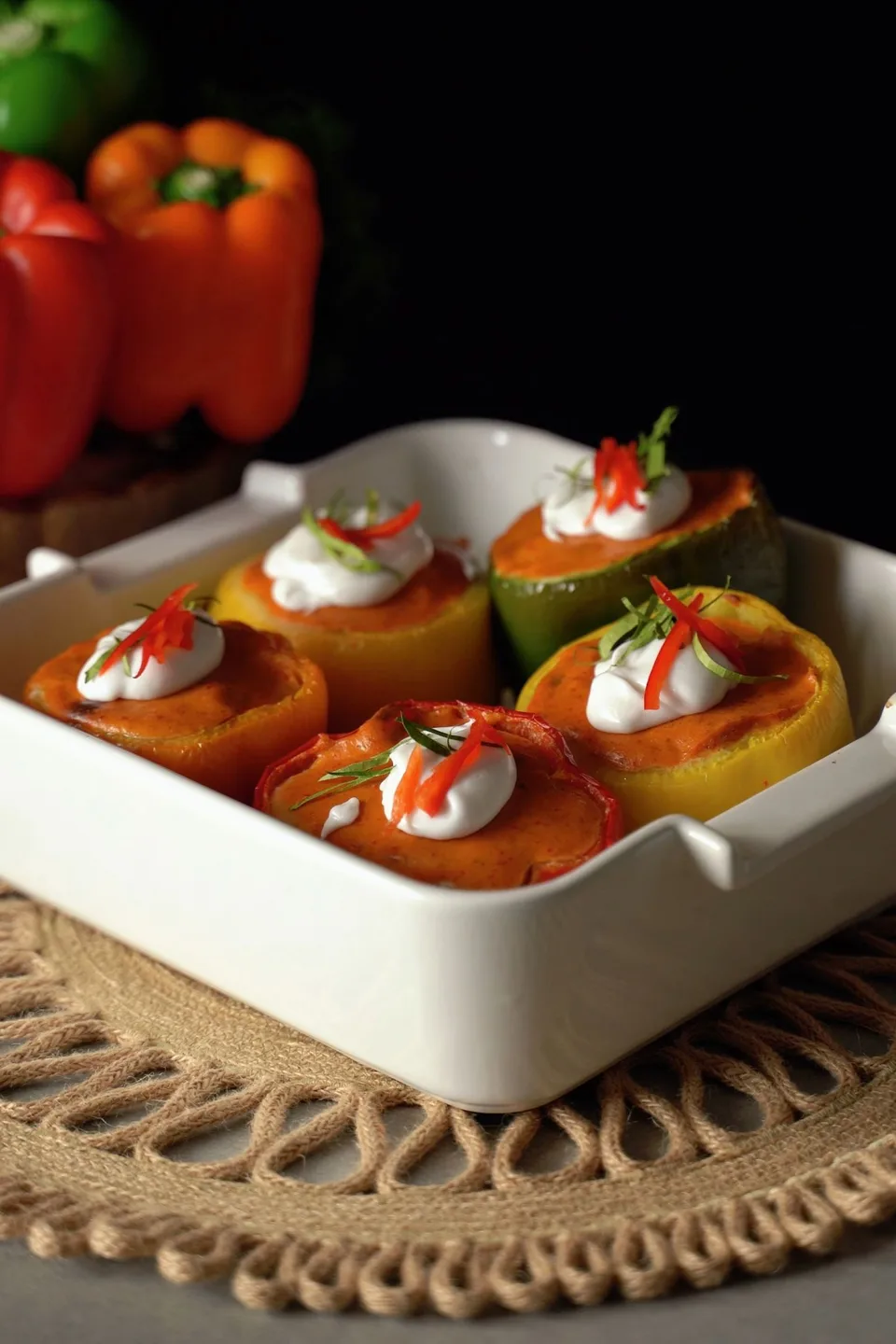
Cut into an underdone stuffed pepper and it presses back against the knife. Cut into an overfilled one and the stuffing falls into a wet pile on the plate. Neither problem requires a new filling. What helps is letting the two components cook apart for a while. The pepper needs direct heat and time to lose some of its water. The filling needs enough time in a skillet to taste finished before it goes into the shell. The oven can then bring the two together without having to finish cooking them both from scratch.
Use three medium bell peppers for six halves. Red, orange, and yellow peppers will taste sweet when roasted, while green peppers bring a more assertive flavor. The filling needs about two cups of cooked pearl barley, eight ounces of mushrooms, one small onion, olive oil, and a tablespoon of tomato paste. A little grated hard cheese is optional. For the table, have plain yogurt or a handful of chopped herbs and a lemon. The whole dish is worth making with leftover barley. If cooking the barley specifically for this recipe, cook it according to the package and drain it well before it reaches the skillet.
Cut the peppers so they sit flat
Heat the oven to 425°F or 220°C. Wash the peppers, pat them dry, and cut each from stem to tip. Look at the shape before deciding where to cut. Some peppers have a prominent lobe that makes them roll when laid on the pan. Rotate the pepper so each half will have a fairly stable outside. Leave the stem if it helps the halves keep their shape, but remove the seed clusters and any large strips of white membrane. Brush the cut edges and the outside with a light film of oil and sprinkle a pinch of salt inside each half.
Place the halves cut side down on a rimmed baking sheet. The cut edge will begin to soften where it touches the metal. Roast for twelve to eighteen minutes, checking the smallest halves first. Pull the tray when the peppers have lost their stiffness but still lift in one piece. Turn them over with tongs. If liquid has pooled on the tray, move the peppers to a dry part or carefully pour off the liquid. A pepper that has cooked until limp will still taste fine, but it will be harder to fill and move. Set such a half in a shallow baking dish, where its sides can rest against the sides of the dish.
Cook away the mushroom water
Trim and chop the mushrooms into pieces about the size of a large bean. Smaller pieces will distribute through the filling while still giving the barley something to chew against. Chop the onion a little finer. Put a large skillet over medium-high heat and add a spoonful of oil. Add the mushrooms in a layer and wait a short time before stirring. They will release liquid as they heat. Let the liquid cook away. Wait for the mushrooms to make contact with the dry surface again and pick up some color before reducing the heat to medium and adding the onion.
If your pan cannot fit the mushrooms in a loose layer, cook them in two batches. Piling the pieces deep will still cook them, but the bottom of the pan may stay wet until the mushrooms have softened beyond the point you want. When the second batch is browned, return the first to the skillet, add a little oil if the surface looks dry, and stir in the onion. Cook until the onion tastes sweet and has lost the bite of a raw piece. Push the mixture outward and cook the tomato paste in the center for about a minute. Stir everything together once the paste darkens slightly and smells sweet rather than raw.
Use the barley to set the texture
Stir in the drained barley and a pinch of salt. Stir a few times, then taste. Barley brought straight from the refrigerator may cling together. Break it up with the edge of a spatula and give it time to warm. If a spoonful forms a damp mound, keep stirring until steam subsides. If the mixture is dry and pieces scatter when you spoon it up, a teaspoon or two of water can loosen the tomato paste enough to coat the grain. The filling should hold together loosely when pressed, with no pool of liquid at the bottom of the skillet. Season with pepper or a little chopped thyme, then check the salt once more.
Cooked brown rice or farro can stand in for barley. Use a grain that still has distinct pieces when you take a spoonful. Soft, overcooked grains may make the center pasty, especially if you add a thick tomato sauce. Lentils also work when cooked until just tender and drained well. If you are using a grain that already carries a seasoning, taste it before adding the tomato paste. A strongly flavored leftover pilaf may only need mushrooms and a little chopped onion. Work with the grain you have instead of asking the filling to behave like an entirely new dish.
Fill to the rim and heat through
Use a spoon to divide the filling among the pepper halves. Add it up to the rim without pressing hard. A heap higher than the rim has a tendency to tumble onto the tray, and a firmly packed filling will feel dense when you eat it. If you have extra, keep it in the skillet to serve on the side. A modest layer of grated cheese over each pepper helps the exposed filling brown, but the dish works without it. For a more pronounced crust, mix a spoonful of breadcrumbs with a few drops of olive oil and scatter them lightly across the top.
Return the pan to the oven and bake for about ten minutes, until the centers are hot and the surface begins to color. Use a thin knife to check the thickest part of a pepper. It should cut through with little effort while leaving the edge intact. If the filling is hot but a few halves are still firm, move the soft ones to a platter and give the rest more time. If using cold leftover barley or another prepared filling, heat the centers to 165°F or 74°C. Avoid using the broiler to finish peppers whose walls still need to soften. It adds color on top without doing much for the thick part underneath.
Set out the finishing ingredients separately
A spoonful of plain yogurt tastes especially good against the slightly sweet pepper. Loosen thick yogurt with a few drops of water so people can spoon it over the halves rather than dropping a cold mound onto the center. Chopped parsley and lemon zest offer a lighter finish. If your cheese is strongly flavored, skip further salt at the table and squeeze a little lemon over a single bite first. You can also bring a bottle of olive oil to the table and let people add a drop where the cut edges have dried. The meal needs less dressing than a salad because the peppers are already tender.
Two halves make a light meal with a side of greens. One half works as part of a dinner with a soup or a bowl of beans. If the peppers vary in size, arrange them on a platter instead of trying to make equal plates. Small halves can be picked up with a spatula and shared easily. Let the food sit for a couple of minutes before moving it so the tender shells have time to settle. Slide a wide spatula under the entire half. Trying to pick up a full pepper with tongs can squeeze the filling straight out the top.
Prepare one component in advance
If dinner needs to come together quickly, cook the filling the day before and refrigerate it promptly in a shallow container. Let the peppers roast while you reheat the filling in a skillet. Taste and adjust the texture once it is hot. Barley may absorb a little more moisture overnight. A small splash of water will help it soften without leaving the bottom of the pan wet. If you need to bring the dish somewhere, bake the halves in a shallow container you can carry and reheat safely. Keep the yogurt separate and chilled until it is time to serve.
Leftover halves can be reheated in the oven until hot throughout, or you can chop the peppers and stir them into the filling in a skillet. A halved pepper is an attractive way to serve barley tonight, but tomorrow there is no reason to preserve the original shape. The filling already has enough flavor to become a quick lunch with a crisp leaf salad. The pepper skins may pull away easily after reheating. Remove them if you prefer a softer bite. Making the dish in two stages leaves a better filling and a tender pepper, even after they have spent a night together.
When you have just one pepper, roast its halves in a small metal pan while another dish is in the oven. A little filling is enough. Use the remainder as a base on the plate and put the hot halves beside it. This keeps a single pepper from becoming a precariously overfilled dinner.