The Sharing Rules That Make Hot Pot Work
A shared pot makes the table part of the kitchen. Clear utensils, small batches and a little attention to the broth keep everyone involved.
8 min read
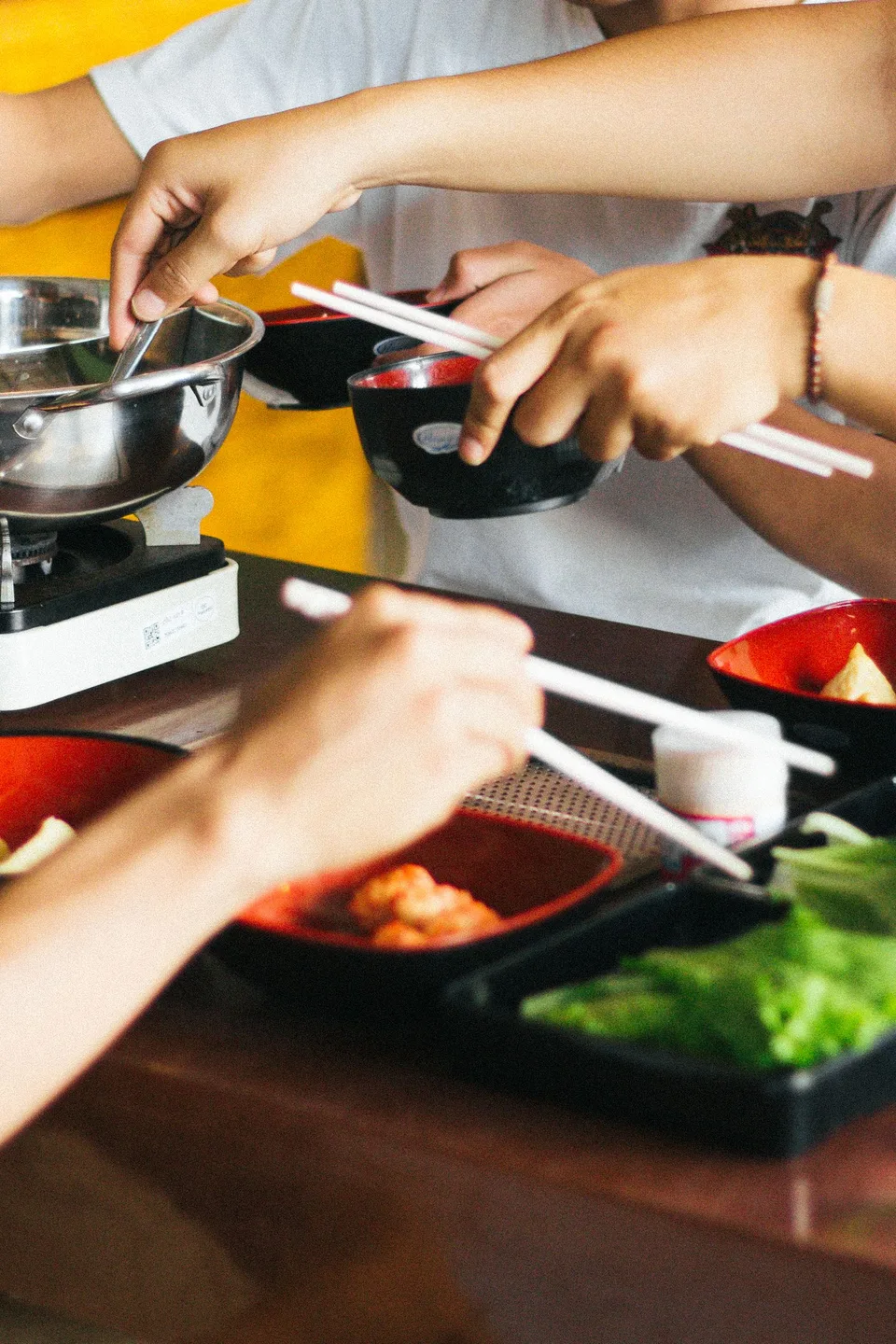
At a hot pot table, the person who usually cooks dinner can finally sit down. Cooking still happens, but its work moves to the middle of the table. Someone lowers in greens. Someone else watches when the broth returns to a boil. A third person lifts cooked pieces out and divides them among bowls. If everyone puts in food at once and assumes another person is watching it, the arrangement stops working. The good version feels casual because the table shares a few clear tasks.
Hot pot is a broad description, with many regional traditions and household versions. The broth, equipment, ingredients and sauces vary. This is a guide to the shared work of one table, rather than a claim about what belongs in every pot. Whether the broth is mild and clear or thick with the aroma of spice, diners still need to know what is in it, what they are waiting for and which utensil they can use to retrieve a cooked bite. Answer those questions early and most of the meal can proceed by conversation.
Set the table before bringing out raw food
Use a stable pot and a tabletop cooker designed for the job. Follow the equipment instructions, including any rules for ventilation, clearance and compatible pans. Keep the pot and cord where a person standing up will not pull or catch them. The pot should be easy for an adult to reach without extending a sleeve over the heat. Choose seats accordingly. Children and anyone who cannot comfortably reach the middle can be served from the pot instead of being asked to handle it.
Give raw ingredients their own zone, separate from cooked and ready-to-eat foods. Put one clearly distinct set of tongs or chopsticks in that zone. Keep a clean ladle or other serving utensil for cooked food where it cannot be confused with the raw utensils. An obvious color or different shape helps at a crowded table. Eating utensils stay with individual bowls. Hong Kong's Centre for Food Safety recommends this separation in its guidance on eating hot pot safely. It also advises against crowding the table with dishes, which is useful both for reducing cross-contact and for keeping room to move a hot bowl.
Set out clean sauce dishes, water and a place for spare utensils. Ask about allergies before buying the ingredients, especially when you plan to use a prepared broth or dipping sauce. A shared broth cannot keep one ingredient away from another. A divider can help keep two flavors distinct during an ordinary meal, but splash or utensil contact can still cause cross-contact. If separation is important for safety, arrange a separate pot and utensils or choose ingredients that suit everyone. Tell diners what goes into a broth rather than asking them to infer it from its appearance.
Put a small amount of each ingredient within reach
It is tempting to start with every plate in sight. A few dishes are easier to watch. Choose a vegetable or two, an ingredient with a firm bite such as tofu, and whatever else the group is planning to cook. Keep additional chilled portions in the refrigerator until you need them. Use separate clean plates for the cooked food. A plate that previously held raw meat or seafood should go to the sink rather than being brought back to the table with cooked pieces.
One useful arrangement puts the raw zone within reach of a person who is happy to add ingredients, with the cooked-food utensil on the other side. This can reduce confusion in a small group. In a larger group, agree on who will handle the pot during the first round and let someone else take over once the meal settles. The task does not have to belong to the host for the entire evening. Someone with a good view of the broth is often the easiest person to ask.
Serve each kind of ingredient in pieces that will cook at a similar rate. A thin strip and a thick chunk of the same meat may need different cooking times. Use reliable directions for each product and the food-safety guidance applicable to your ingredients. A hot surface, opaque outside or expected color does not by itself establish that the middle is safe. If using raw animal products, verify the appropriate internal temperature with a suitable food thermometer. You can keep the table simpler by choosing ingredients that are already cooked and only need heating according to the package or recipe.
Cook in rounds you can follow
Bring the broth to a boil before adding ingredients. A large cold batch will drop the temperature of the broth and make the time needed harder to judge. Add a modest portion and watch it return to a boil. If you add fresh water or broth, wait for the pot to return to a full boil before taking food out and continue cooking until the contents are thoroughly done. The Centre for Food Safety's hot pot advice explains why that return to a boil matters. Keep the boil controlled so hot liquid does not splash while people add or lift food.
Cook pieces with similar requirements together, and wait for one round to finish before adding a new batch of raw food. You will have a clearer idea of what is done. For instance, cook a round of mushrooms and sturdy vegetables, lift them out with a clean utensil, then bring in a different ingredient. Staggering rounds also prevents a tender leaf from disappearing beneath a pile of heavier pieces. If you want several foods in a bowl, collect them as they finish and take a small amount each time.
Say what you added. This is partly consideration for someone who has a preference and partly a useful way to remember when the ingredient went in. If several people are serving, ask who is watching each batch. A very brief check-in saves the uncertain moment when a person tries to pull a piece out and everyone else wonders whether it was added a few seconds ago. Leave raw utensils in their assigned spot between uses instead of putting them across a bowl where they can be picked up by mistake.
For a table that includes someone who is new to the meal, show them how the first cooked portion is lifted and passed. This short demonstration gives them a chance to see which utensils move and where they can put a bowl. They can join in at the next round or leave the middle to somebody else and still eat at the same pace.
Let the sauces be personal
A modest set of options is usually enough. Something savory, something sharp and a few fresh aromatics give diners a chance to make a small bowl that suits them. If you offer prepared sauces, keep their labels available to answer ingredient questions. Use a clean spoon for each and put it back where it belongs. Avoid a shared dipping dish when everyone is eating from their own bowl. The communal part is the pot, and it is still possible for a person to control what happens to a bite after it comes out.
A mild ingredient such as tofu can take a little extra sauce without losing all of its own taste. Broth-soaked greens can be enjoyable with very little. Try a bite with just the broth first, especially when the soup is already strong. Some sauces will make a whole bowl seem heavier if you add them early. You can always dip a piece after it is served. That gives people the option to eat the same ingredients at different strengths and still share a pot.
Take care with additions that are intended to stay raw. A raw egg mixed into a sauce, for example, can bring a food-safety risk. The Centre for Food Safety advises against mixing cooked food with raw egg at a hot pot meal. Provide a sauce that is ready to eat instead. Clean, clearly labeled bowls make it easier to choose without stopping to ask what has been added.
Finish at the pace of the people who are still eating
The broth changes as the meal goes along. Some water evaporates and ingredients release their own flavor. Add liquid as needed and let it return to a boil before continuing. Taste with a clean spoon once it is safe to do so. If it seems stronger, a little unsalted broth may be enough to bring it back into balance. At the end, noodles or another ingredient that takes up broth can make a pleasant last round. Add them only if people want them and cook them according to the package.
When people slow down, remove raw dishes that are no longer needed, paying attention to how long perishables have been outside temperature control. Keep the path around the hot equipment clear until the cooker is off and the pot can be handled safely. Clear plates in stages rather than reaching through the middle while another person is taking a last bowl. The final few bites should be as easy to eat as the first.
If you host again, remember which job caused confusion. Perhaps one utensil looked too much like another, or a large tray of vegetables occupied the only place where cooked food could land. Changing that detail will help more than adding another sauce. A good shared pot has room for a person to watch the broth, offer a piece to someone else and return to the conversation without waiting for a command.