The Vinaigrette That Fits the Salad
Make a small batch of vinaigrette, taste it with the ingredient it will dress, and learn what to adjust before it reaches the bowl.
8 min read
A vinaigrette can taste lively from the tip of a spoon and disappear on contact with a cold cucumber. The same spoonful can swamp a handful of young lettuce. This is why measurements alone are a poor final test. A dressing needs to carry flavor across a particular surface, and a bowl of warm potatoes will respond quite differently from a stack of crisp leaves. Learn to taste the dressing with one piece of the food it is meant to season, and the rest of the method becomes simple. You can go from a jar of vinegar and a bottle of oil to a balanced salad without buying a shelf of new ingredients.
There is a useful distinction between the concentrated seasoning in the mixing bowl and the thin coating that ends up on a bite of salad. The concentrated version may feel a little too bright when tasted by itself. The final bite should leave enough of the vinegar, salt, and oil to bring out the flavor of what you are eating. Good dressing is fairly quiet once it has done that job.
Begin with two tablespoons of oil
A tablespoon of wine vinegar and two to three tablespoons of oil make a practical starting batch for a small side salad. Use two tablespoons when you prefer a bright dressing, or add the third after the first tasting if the acid is prominent. In a bowl, stir together the vinegar, a small pinch of fine salt, a few turns of pepper, and half a teaspoon of Dijon mustard if you like. Salt will distribute more easily when it goes into the vinegar first. Add the oil in a thin stream as you whisk. There is no need to whisk vigorously after the mixture has become smooth.
You can shake the same ingredients in a jar. Choose one with a clean lid and enough empty space for the liquid to move. Add the oil last, close the lid fully, and shake until the dressing looks uniform. Put the jar on the counter before opening it. Shaking is handy if the dressing has to wait a few minutes, since another brief shake will bring the parts together. A bowl is easier if you want to whisk in just a few drops at a time.
Use a clean spoon to taste a little on a piece of what you are dressing. If the dressing seems sharp but the lettuce tastes good, leave the ratio alone. If the lettuce tastes mostly of vinegar, whisk in a teaspoon of oil and try again. When the leaf tastes oily and flat, add a few drops of acid. If oil and vinegar are both easy to detect and the salad still tastes muted, add a little salt, stir, and give it another taste. A new spoonful of oil cannot correct a lack of salt.
Pick the acid for the rest of the plate
A mild wine vinegar is a sensible starting choice. White wine vinegar sits comfortably with delicate greens, cucumbers, and fresh herbs. Red wine vinegar is good with white beans, grilled peppers, and vegetables with some char. The flavor of vinegar varies by bottle, and the difference is easy to taste in a plain vinaigrette. Two vinegars may be similar on paper and taste quite different in the same mixture.
Fresh lemon juice brings some aroma as well as acidity. Strain out the seeds and taste the juice before you commit to a fixed ratio. Half a lemon may yield surprisingly little liquid. If you need more but have only one lemon, use a small amount of mild vinegar to finish the batch. A tiny amount of grated zest can make the lemon stand out without making the dressing more sour. Keep the bitter white pith out of the mixture. Try lemon with warm green beans, thinly sliced fennel, or a plate of roasted carrots that needs a fresh finish.
A sweeter vinegar or a little fruit juice changes the effect. A spoonful of cider vinegar can be enough for a cabbage and apple salad because the apple already brings sweetness. A little sherry vinegar works well when a salad includes a substantial ingredient such as lentils. If a thick balsamic vinegar tastes nearly syrupy, use a small amount at first and brighten it with wine vinegar if needed. Avoid pouring dark, dense dressings over every ingredient just because they taste pleasant alone. They can cover up the clean, fresh taste of a young leaf.
Give the oil a supporting role
Extra virgin olive oils vary from mild and fruity to bitter and peppery. Use a strong one where you want to taste it. A bean salad with tomatoes or a platter of grilled vegetables can take a robust olive oil. A delicate dressing for baby greens may be better with a more restrained oil. If you enjoy a distinctive olive oil but find it dominates this batch, dilute it with a neutral oil in the mix. Neutral oil is also a good base when you want mustard, herbs, or toasted spices to be the first flavor a diner notices.
Strong finishing oils make good accents. A few drops of toasted sesame oil can change a dressing for shredded cabbage, especially with rice vinegar and a little grated ginger. A small splash of walnut oil can tie together pears and sturdy greens if everyone eating can have nuts. These oils can overwhelm a small salad if used for the whole volume. Begin with an ordinary oil, add the aromatic oil in drops, and stop as soon as you can identify it in a bite of the salad.
Vinaigrette also makes the condition of the oil obvious. A bottle that has begun to smell stale or like old nuts should not be used just because it has a little left. Taste a small drop if you are unsure. A dressing has few places to hide an off flavor, and extra vinegar rarely improves it.
Keep the emulsion useful
Oil and vinegar naturally separate. Whisking or shaking breaks the oil into tiny droplets, creating a mixture that can coat an ingredient more evenly for a while. Dijon mustard helps those droplets stay dispersed. It also adds salt and its own bite, so taste before adding a second spoonful. A little honey can round off a very sharp mixture, though it will bring sweetness. The mixture does not have to remain emulsified for the entire meal. Give it a stir immediately before serving.
Aim for a dressing that pours in a narrow ribbon. If it seems heavy and sticks to one part of a leaf, whisk in a few drops of water to lighten it. That trick is useful when a lot of mustard or a thick vinegar has already gone into the bowl. If it is too watery and runs straight to the bottom of the salad bowl, check the vegetables for moisture first. Wet lettuce is a common source of diluted dressing. Spin or pat washed greens dry, and drain cut cucumbers or tomatoes briefly if they have left a puddle on the board.
Add fresh herbs at the end if you want them to retain their texture. Chop only as much as you need, and taste the dressing again after they go in. A spoonful of parsley or dill can read as almost bland at first and then become quite clear on a bite of warm potato. Minced shallot has a stronger effect. Let it stand in the vinegar for a few minutes before adding the oil if you want the taste to mellow a little. Fresh garlic grows more assertive as it sits. Use a very small amount and mix the dressing close to serving.
Dress leaves and sturdy vegetables differently
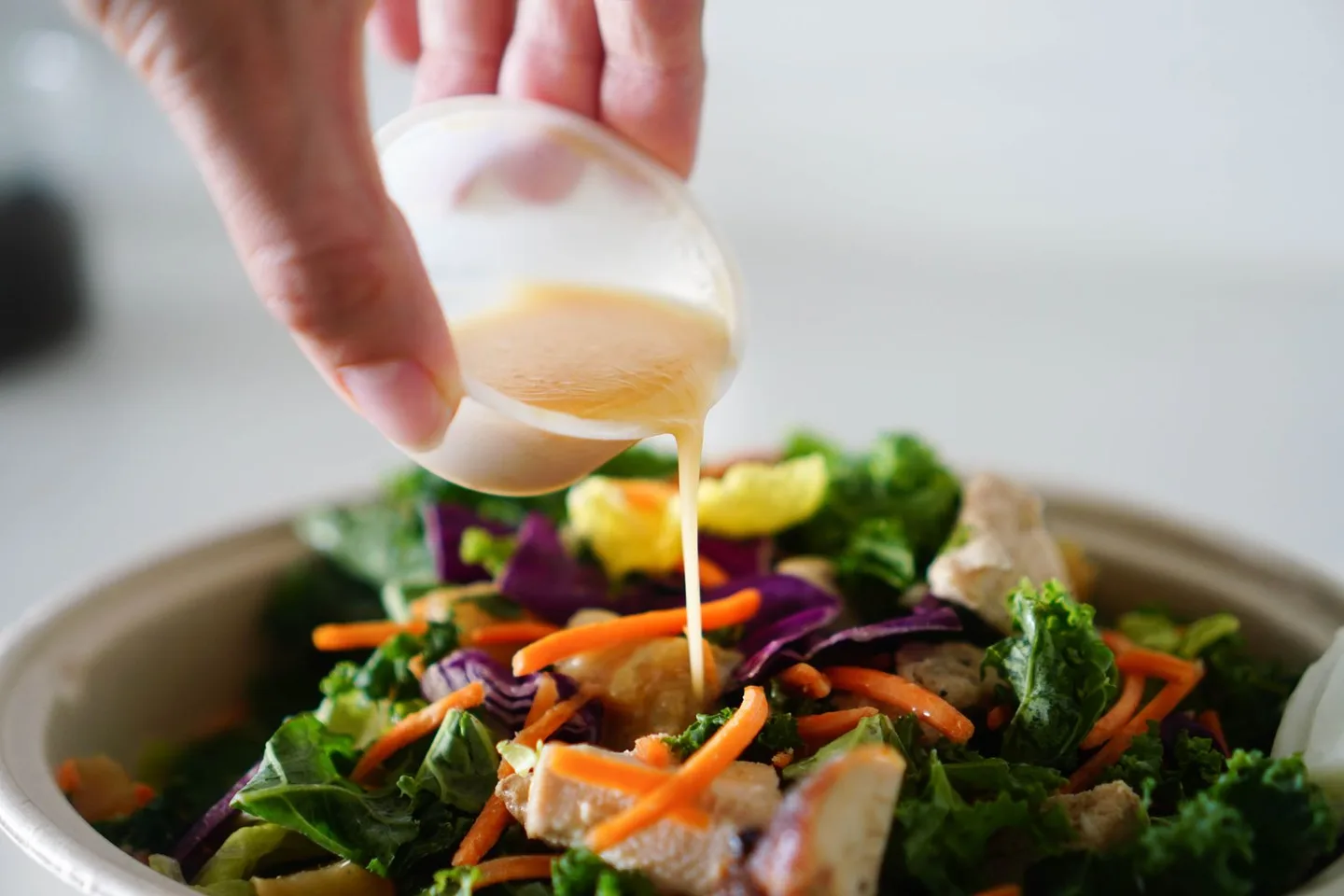
For lettuce, dress just before eating. Put the dry leaves in a broad bowl and begin with a little less dressing than seems necessary. Toss gently with clean hands or broad salad servers so the leaves turn over without being squeezed. Pick up a leaf from near the bottom to taste it, since that is where extra dressing collects. Stop when the leaves are lightly coated. More dressing can always go on at the table.
Cooked potatoes, lentils, and farro take dressing differently. Let a warm ingredient shed visible steam, then toss it with some of the dressing and set the rest aside. A warm potato takes on flavor fairly quickly, and you can adjust again as it cools. Lentils hold a thin coating between the grains. Keep fresh herbs and crunchy garnish for the end so they stay distinct. For roasted vegetables, avoid pouring dressing over a crisp tray all at once. Transfer the pieces to a plate and spoon a narrow line around them, or give them a gentle toss at the last minute.
Thinly sliced raw cabbage falls between these groups. It can soften a little under salt and acid while holding its shape. Put a modest amount of dressing on it ten minutes before dinner, turn it with tongs, and taste it again once the shreds have relaxed. If you want a crisp topping such as toasted seeds, scatter it on after the cabbage goes to the table.
Repeat a favorite in three versions
Make the starting batch and spoon a little into three small dishes. Put a pinch of chopped dill into one, a little lemon zest into the second, and a dab of mustard into the third. Taste each on three pieces of the same vegetable. Use cucumber for a cool, watery test or a warm potato for a starchy one. The best version for the cucumber may be the least successful on potato, and the reason may have more to do with texture and temperature than preference. Write down the combination you like in terms of an actual dish.
Make only as much as you need when the dressing contains fresh shallot, garlic, or herbs. Keep unused dressing covered and refrigerated promptly. For a salad the next day, it is quick to make another small jar. Once you have a favorite bottle of vinegar and an oil you trust, the change from salad to salad can be as small as an extra drop of lemon, a few dill leaves, or a bigger pinch of salt. The important taste is the one you take with an actual bite of what is on the plate.