A Whole Cauliflower Has More Than One Dinner in It
Break down a head of cauliflower for caramelized slabs, a pan of golden crumbs, and a lemony dinner that uses the tender leaves.
7 min read
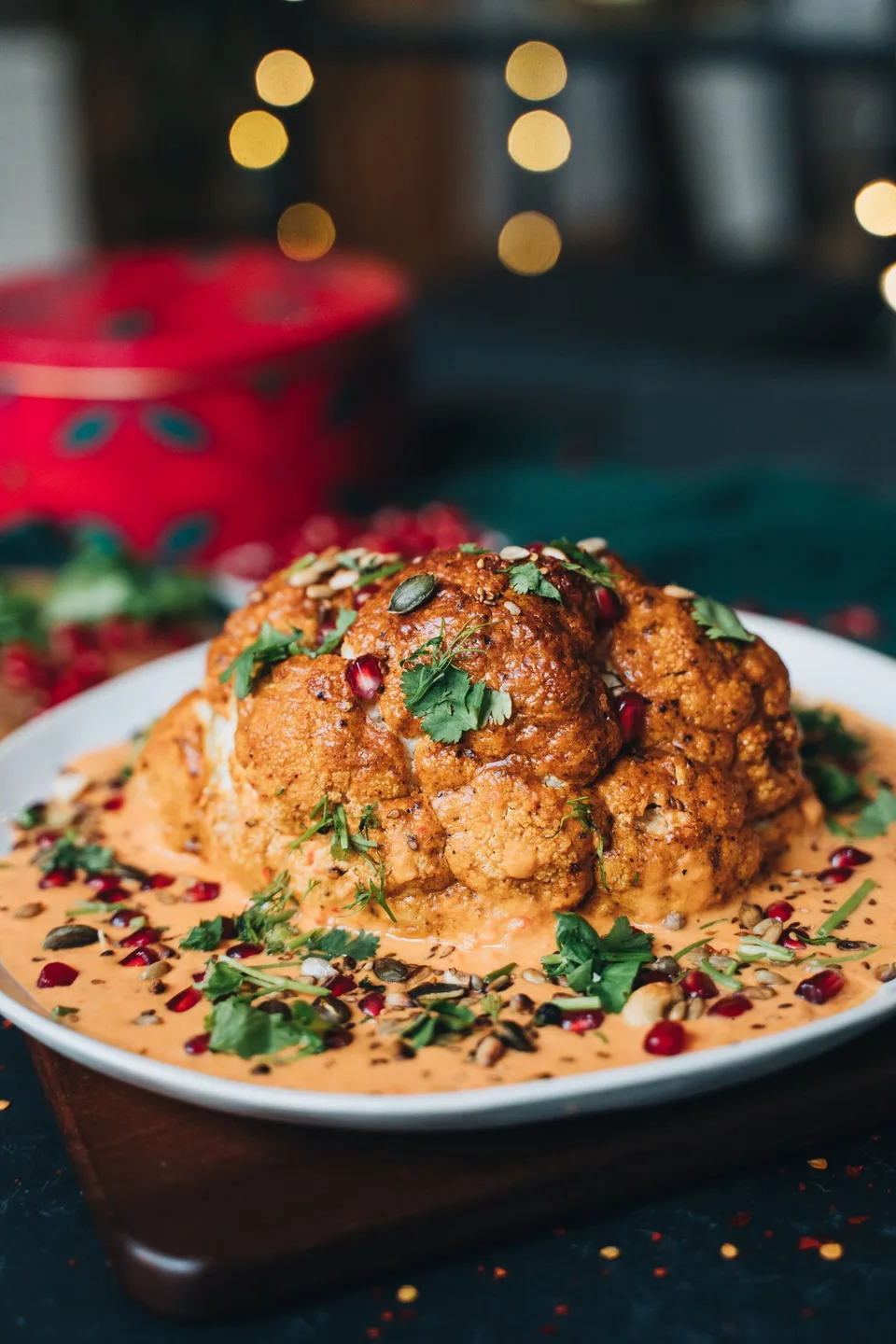
The center of a large cauliflower can be cut into two handsome slabs that survive a turn in the oven. The outer branches cannot. They fall away in lopsided pieces, and the leaves and small buds pile up beside them. You could reserve the scraps for another day, but a more satisfying dinner comes from giving each part of the head a job tonight. The slabs and the large florets go on a pan. The tender inner leaves join the roast for its last few minutes. The tiny bits from the board go into a skillet with breadcrumbs, where they add a little sweetness to the crisp finish.
This is enough for two people with bread and a spoonful of thick yogurt, or for four as part of a larger meal. Buy a firm cauliflower with a relatively tight center. It does not have to be large, though the wider the head, the more likely you are to get two well-shaped slabs. Have about four tablespoons of olive oil, a lemon, a half cup of coarse breadcrumbs, salt, pepper, and plain yogurt available. A spoonful of capers is optional. The roast tastes good with a dollop of beans in place of the yogurt if you want to keep the meal dairy-free.
Find the sections before you cut
Pull off the thickest outside leaves. If they are sound, you can save them for stock or cut the softer parts away from their tough ribs. The small leaves that tuck close to the cauliflower are generally more tender. Wash them and blot them dry. Cut a little off the base of the stem so the head sits upright. Now slice the cauliflower down the middle with a steady chef's knife. Place each half flat on the board. Cut a slab about an inch thick from the cut face of each half so a section of stem holds the branching pieces together. Cut any protruding ends shorter if they threaten to snap.
If the head breaks into florets as you slice, turn the plan into a dinner of florets. Cut the largest in half through their stems. You still want flat cut faces, since those are what make direct contact with the sheet. Trim and slice the solid center of the stalk if it looks good. Its flavor is mild and it cooks reasonably quickly when cut into coins a quarter inch thick. This is also the point to sweep any loose buds into a cup for the crumb topping. Include tender white scraps that you can cut into small, fairly even pieces.
Make room for the color to develop
Heat the oven to 425°F or 220°C. Set a rack near the middle. Brush both sides of the slabs with olive oil and season lightly with fine salt. Toss the large florets and any sliced stalk with a little more oil, then arrange them around the slabs on a rimmed metal baking sheet. Keep the broadest cut sides down. If you are using one particularly big head, put the florets on a second pan rather than jamming them along the edge of the first. A few specks of pepper can go on now. Save any fresh garlic or lemon for the counter, since exposed garlic may turn bitter before the cauliflower becomes tender.
Begin checking after fifteen minutes. Lift a floret first and look at the contact side. When that side is dark gold and releases cleanly, turn it. Use a wide spatula for the slabs and support a branching edge with another utensil if needed. A loose floret that breaks away can stay on the pan by itself. Slide the tender leaves into the open spaces, rubbing them with a few drops of oil first. The parts nearest the rim of the sheet may crisp in only a few minutes. Check them when you check the second side of the slabs. Pull a leaf early if it has browned while the rest needs more time.
Toast the crumbs while the oven finishes
Set a small skillet over medium heat and add a tablespoon of oil. Tip in the reserved cauliflower bits, spreading them out with a spoon. Stir once they start to color. Let their moisture cook away before adding the breadcrumbs. If the cauliflower pieces look glossy with moisture, keep stirring over the heat for another minute. The crumbs should go into a skillet that smells toasty and looks relatively dry. Add them with a pinch of salt and stir frequently until the mixture is golden throughout. Stop while the palest crumbs still have a little color left to gain from the hot skillet. Transfer the mixture to a plate immediately.
Coarse breadcrumbs give you the contrast that makes this dish memorable. A piece of slightly stale bread can be torn into chunks and pulsed briefly in a food processor. If your bread is very soft, toast it lightly and let it cool first. There is no need to pick out every piece larger than the others. A few irregular bits give the topping different kinds of crunch. If the crumbs are already quite dark, make the cauliflower bits separately and add them at the end. Taste the finished mixture before adding capers, because salted breadcrumbs and capers together can easily overpower the vegetables.
Dress at the last minute
Put a few spoonfuls of thick plain yogurt in a shallow bowl and season it with a pinch of salt and a little lemon zest. Stir and taste it. Tart yogurt may need no lemon juice at all. Use a broad spoon to spread a little yogurt across each plate. Lift the hot slabs onto it and arrange florets beside them. Scatter the leaves over the top so their dry edges stay clear of the yogurt. Squeeze a little lemon over the florets and finish with the crumb mixture. A few chopped capers add salty, sharp bursts if you want them. Their brine can soften the crumbs, so drain them well first.
For a group meal, a serving board or shallow platter is better than a deep bowl. A deep bowl makes the slabs difficult to lift and gathers liquid at the bottom. Put the crumbs in a separate small dish if the meal will sit while you finish something else. Serve the yogurt on the side if you are transporting dinner to a table outdoors. The cauliflower holds up better than its topping does. Add the brittle elements when you are ready to sit down, and let people choose whether they want the soft leaves as well as the crisp ones.
Use what the cauliflower gives you
Small heads tend to cook quickly and can make excellent single servings. One small head cut into thick pieces may fit in a large skillet if the oven is already in use. Let the cut faces brown on the stove, then lower the heat and cover briefly until a knife enters the thickest stems. Uncover to let the steam escape. The oven gives a drier, more even result, but the stovetop works when you want to cook a modest amount. Save the crumbs separately in either case.
For a picnic-style plate, skip the yogurt and serve the cauliflower at the table with a spoonable dressing made from lemon, olive oil, and finely chopped parsley. If you already have cooked white beans, warm them with a little of their cooking liquid and pour them into the bottom of a shallow bowl. Put the roasted cauliflower on top and add the crumbs just as you would with yogurt. The white beans make the plate less dependent on bread. Another option is a pile of warm green lentils, which holds the crumbs in place without covering the browned parts of the cauliflower.
Look for tender stems, not matching edges
The highest point of a floret can brown before the stalk is done. Cut through a thick piece to check it. The knife should meet a little resistance without catching in the center. If the edges are getting too dark while the stem is still firm, move the pan to a lower rack and give the vegetables a few minutes. For the next batch, cut a thinner slab or separate any big branch into two pieces. The center and the outer branches do not need to finish together. Part of the pleasure of cooking a whole head is having a mix of soft stems, crisp little leaves, and broad browned surfaces on one plate.
If you have leftovers, refrigerate the cauliflower promptly and pack the topping and yogurt separately. Chopped cold slabs make a good sandwich filling with mustard and greens. The small roasted pieces can go into a pan with a cooked grain. Add a fresh handful of toasted crumbs if the first batch has softened. You can also drop a few leftover pieces into soup right before serving. A head of cauliflower rarely divides into exactly the portions you planned. The stray florets and uneven slices are usually the easiest pieces to use tomorrow.
If the oven is already occupied, use the free rack for the crumbs on a small metal tray. Toast the cauliflower bits first and add the bread only after they have dried. Shake the tray once and watch the outside edge. Small crumbs brown faster there and can darken while the center still looks pale.